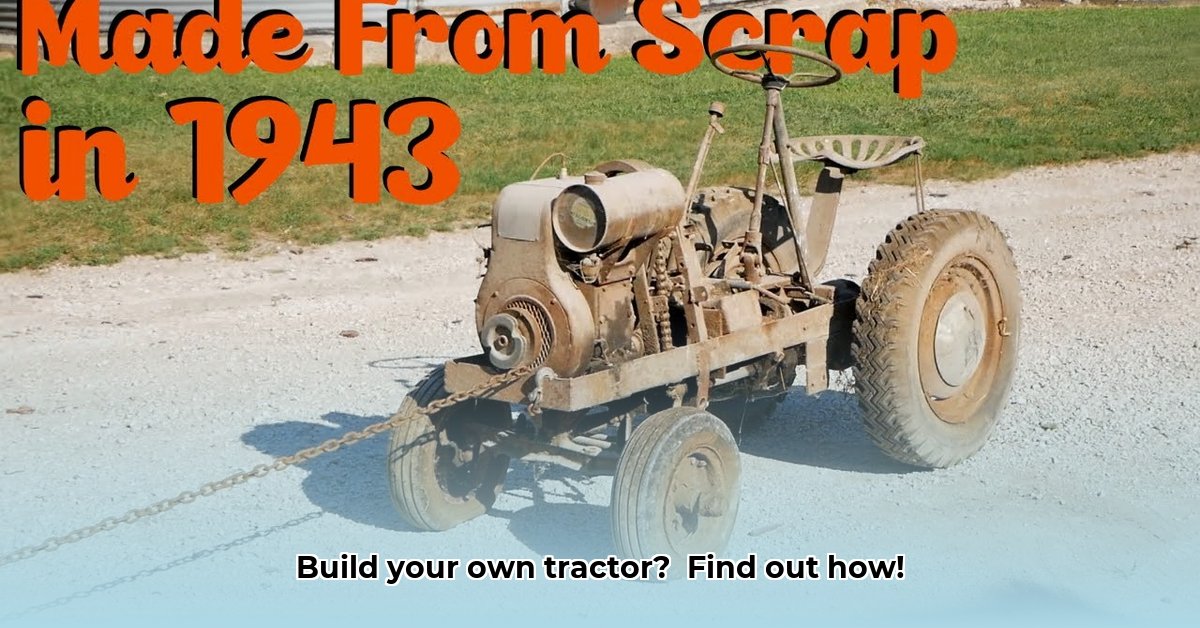
Imagine 1942. World War II rages, rationing grips the nation, and vital farming equipment is scarce. On a farm in the American heartland, Francis Whitesell faced a daunting challenge: a threatened harvest. But Whitesell, a man of unshakeable resolve, refused to be defeated. He possessed a resourceful spirit and a deep understanding of mechanics. His solution? He built his own tractor. The Katydid, as he christened it, wasn't just a machine; it was a symbol of resilience, a testament to human ingenuity, and a powerful lesson in sustainable agriculture – a lesson we can still benefit from today. For more on building your own tractor, check out this helpful guide: tractor building guide.
The Birth of a Legend: Resourcefulness in Action
The Katydid wasn't born in a gleaming factory; it was painstakingly assembled in a barn, a true testament to making do. Working alongside his uncle, Homer, a skilled welder, Whitesell scavenged junkyards and salvage yards, transforming discarded parts into agricultural gold. The engine? A repurposed 1936 Chevy powerplant. The transmission? A salvaged truck component. The rear end? Another repurposed treasure. It wasn't beautiful, but it was functional, a powerful testament to resourcefulness during wartime scarcity. Did you know that this remarkable machine proudly tilled 70 acres of farmland, pulling a two-bottom plow? This simple fact highlights the extraordinary power and effectiveness of this home-built marvel. This begs the question: How much untapped potential for sustainable solutions lies dormant within our current agricultural practices?
Beyond Metal and Mechanics: A Community Effort
The Katydid's creation wasn't a solitary endeavor; it was a collaborative masterpiece, showcasing the power of community knowledge and shared expertise. Whitesell and his uncle combined their skills, overcoming challenges that would have defeated most. Each weld, each precisely fitted part, reflected not only mechanical prowess but also a profound understanding of the land and an unwavering commitment to the harvest. This collaborative spirit, so crucial to the Katydid's success, represents a powerful contrast to today's often-isolated approach to modern farming. The Katydid’s story underscores the importance of shared knowledge and community-based solutions. Doesn't this make you wonder about the potential impact of re-establishing such networks within our current agricultural landscape?
A Closer Look: Design, Operation, and Modern Implications
While the Katydid lacked the sophistication of modern tractors, its design was remarkably effective. The machine was undeniably labor-intensive, requiring significant physical exertion from the operator—a sharp contrast to today's automated systems. Yet, its top speed of a remarkable 55 mph (for its time) demonstrated impressive power for its size. More remarkably still, it remained a reliable workhorse for 17 years, a testament to the quality of its construction and the commitment to meticulous maintenance. This longevity challenges our modern throwaway culture, doesn't it? What if we prioritized durability and repair over constant replacement?
This simple machine highlights a key point: efficiency isn't solely about automation. It's about intelligent land management, efficient labor allocation, and a profound understanding of the farming process. The Katydid serves as a vibrant reminder that success in agriculture can be achieved even without the advanced technologies prevalent today—through ingenuity, hard work, and a deep connection to the land.
Sustainable Farming Lessons from a Homemade Tractor
The Katydid’s legacy extends far beyond its years of service; it stands as a powerful symbol of sustainable agricultural practices, a truly green machine that predates the widespread use of the term. Its impressive longevity champions durability and repair, directly opposing our current culture of disposability. The ingenious use of salvaged materials underlines the importance of local resource utilization and the invaluable role of community knowledge transfer.
However, it's essential to acknowledge that the Katydid's construction and operation wouldn't satisfy today's safety standards. Its speed and the absence of modern safety features would be deemed hazardous by current regulations. The point isn't to advocate for a return to such practices, but to highlight the enduring value of resourcefulness and the wealth of knowledge within local communities.
Putting the Lessons into Action: A Path Towards Sustainability
The Katydid's narrative provides a potent call to action. Its story offers invaluable insights into forging a more sustainable agricultural future:
For Farmers: Prioritize equipment repair over immediate replacement. Consider joining or forming local repair cooperatives, fostering knowledge sharing and reducing waste. Explore alternative, resource-efficient farming practices.
For Educators: Integrate stories like the Katydid's into agricultural curricula, inspiring a new generation of resourceful and environmentally conscious farmers. Develop programs promoting practical repair skills and sustainable farming techniques.
For Policymakers: Implement policies that incentivize the repair and reuse of farming equipment. Support initiatives promoting community-based repair networks and training programs focusing on sustainable and resource-efficient agricultural practices.
The Katydid, a homemade tractor born from necessity, embodies resourcefulness, resilience, and the enduring value of community knowledge. Its story reminds us that a sustainable future isn't solely dependent on technological advancements; it's about embracing ingenuity, collaboration, and a profound respect for the land that sustains us.